

Women Aren't Small Men. Why Training With Your Cycle Matters
READING TIME
5 min
AUTHOR

The Cyclist
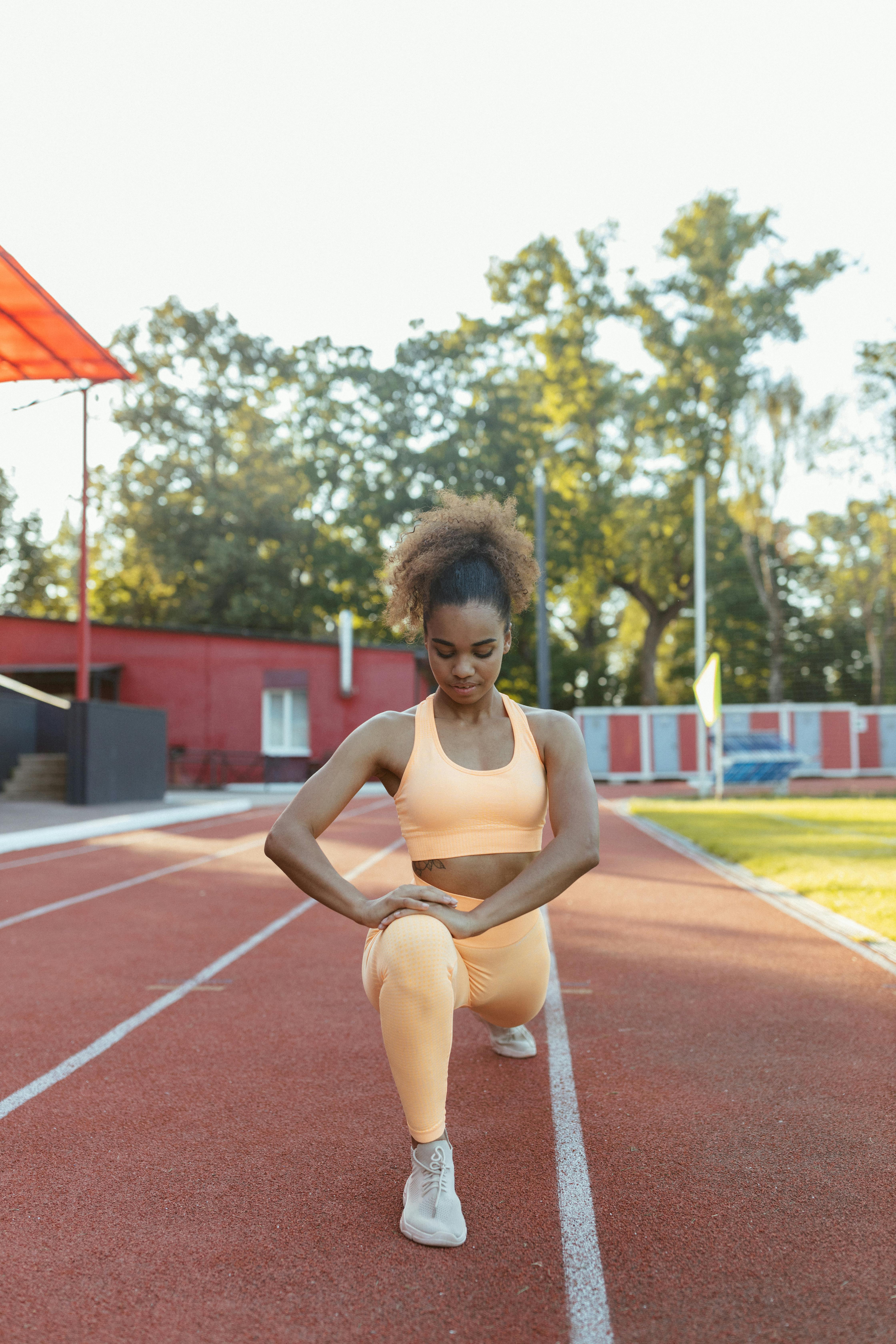
Less than 6% of sports science research has been done on women.
Let that land for a second.
Nearly everything we know about how the human body performs, recovers, and responds to training has been studied on male physiology, then handed down to women as if we're just a smaller version of the same thing. Eat this, but have a smaller plate. Train like this, but dial it back a little.
We spoke to Lydia O'Donnell, Nike Run Club head coach in the Pacific, co-founder of women's running community Femi, and elite marathon runner, about what happens when women are treated as an afterthought in sport science. Spoiler: it costs us, and not just in performance.
The 24-hour problem
Men operate on a 24-hour hormonal cycle. Testosterone rises in the morning, dips slightly by evening, and resets overnight. It's tidy, predictable, and has conveniently shaped every training system, nutrition protocol, and recovery plan in existence.
Women? We're operating on a completely different rhythm.
Across a 28 to 35 day cycle, our estrogen and progesterone shift dramatically, affecting everything from our energy levels and sleep quality, to how we process carbohydrates, how our muscles recover, and even how we respond emotionally to stress. These aren't small fluctuations. They're significant, real, and entirely unaccounted for in most mainstream fitness advice.
As Lydia put it: "None of that has been taken into account. So when you think about training, pretty much 99% of training programs and training platforms have been based on male physiology."
That includes the psychology of it too. What motivates women, what builds our confidence, what makes us feel strong and capable. None of it has been formally studied at scale. We've just been handed a scaled-down version of what works for men and told to get on with it.
When your body pays the price
Lydia's own experience with this is a hard one to sit with. Between the ages of 20 and 25, she was training up to 160km a week, being told by male coaches that she needed to lose weight to run faster. Coaches who would grab her stomach and say: "if you lost that, you'd be quicker."
She was competitive, determined, and willing to do whatever it took. So she trusted them.
There was never a conversation about her menstrual cycle. No mention of how her hormones might explain why some days felt harder than others. No guidance on fuelling for her female physiology. Just a number on a scale and a narrative that smaller meant faster.
Within five years, her body shut down. She lost her period entirely, something we now know as Relative Energy Deficiency in Sport (RED-S), though at the time, Lydia had no idea what was happening.
"I wasn't fuelling correctly. I was training up to 160K a week and my body just essentially shut down."
It took 18 months to recover, and a book (Roar by Dr Stacy Sims) to finally understand what her body had been trying to tell her all along.
The turn-around
Once Lydia learned how to work with her cycle instead of ignoring it, everything changed. She tracked her hormones, adapted her training to the natural fluctuations across her cycle, and actually started eating enough. Within 18 months, she broke every personal best she had, from the 5K to the marathon.
"I just changed the narrative of what food meant to me as a woman and as a runner. I started seeing food as fuel, as energy in order to do the training to reach my goals. I rewrote that story for myself."
Knowledge, it turns out, is the most powerful training tool she had. And no one had given it to her.
What this means for you
Whether you run, lift, do yoga, or just want to understand why you feel completely different in week one versus week three of your cycle, the principle is the same. Your body is not a smaller male body. It runs on its own rhythm, and learning that rhythm is genuinely life changing.
Track your cycle alongside how you feel. Not just symptoms, but energy, sleep, mood, appetite, and how hard training feels. Patterns will emerge. For example:
Your follicular phase (roughly days 1 to 14, from the start of your period through to ovulation) is when estrogen is rising and energy tends to be higher. This is a good time to push harder, try new movements, or go for a PB. Your luteal phase (days 15 to 28, post-ovulation) is when progesterone rises and your body is working harder just to maintain. Scale back intensity and prioritise recovery here rather than fighting it.
Fuel properly. Restriction and over-training is a combination that catches up with all of us eventually. Your body needs food to function, and it needs more of it during certain phases of your cycle. For example, your luteal phase is when your metabolism increases, so upping your carb intake in the lead-up to your period isn't indulgent, it's smart fuelling.
Time your hardest sessions around ovulation. Peak estrogen around ovulation (roughly day 14) is when many women feel strongest, most coordinated, and most mentally sharp. If you have flexibility in your training schedule, this is the window to schedule your most demanding workouts.
Note how your perceived effort changes. The same run at the same pace can feel completely different depending on where you are in your cycle, especially in the luteal phase when body temperature is slightly elevated. If it feels harder, it probably is. Trust that signal rather than pushing through it and give yourself grace.
Find communities that get it. Whether that's The Cyclist, Femi, or just a group chat with friends who understand, you don't have to figure it out alone.
The research gap is real. The dismissal is real. But so is what happens when women finally get the information they deserve about their own bodies.
That's what we're here for.
Listen to the full conversation with Lydia O'Donnell on The Cyclist podcast, wherever you listen.
